WEB
Straight Set Orthodontics
UI/UX Design, Project Manager
Internal and Third-party Content Management System
UI/UX Designer
Project Manager
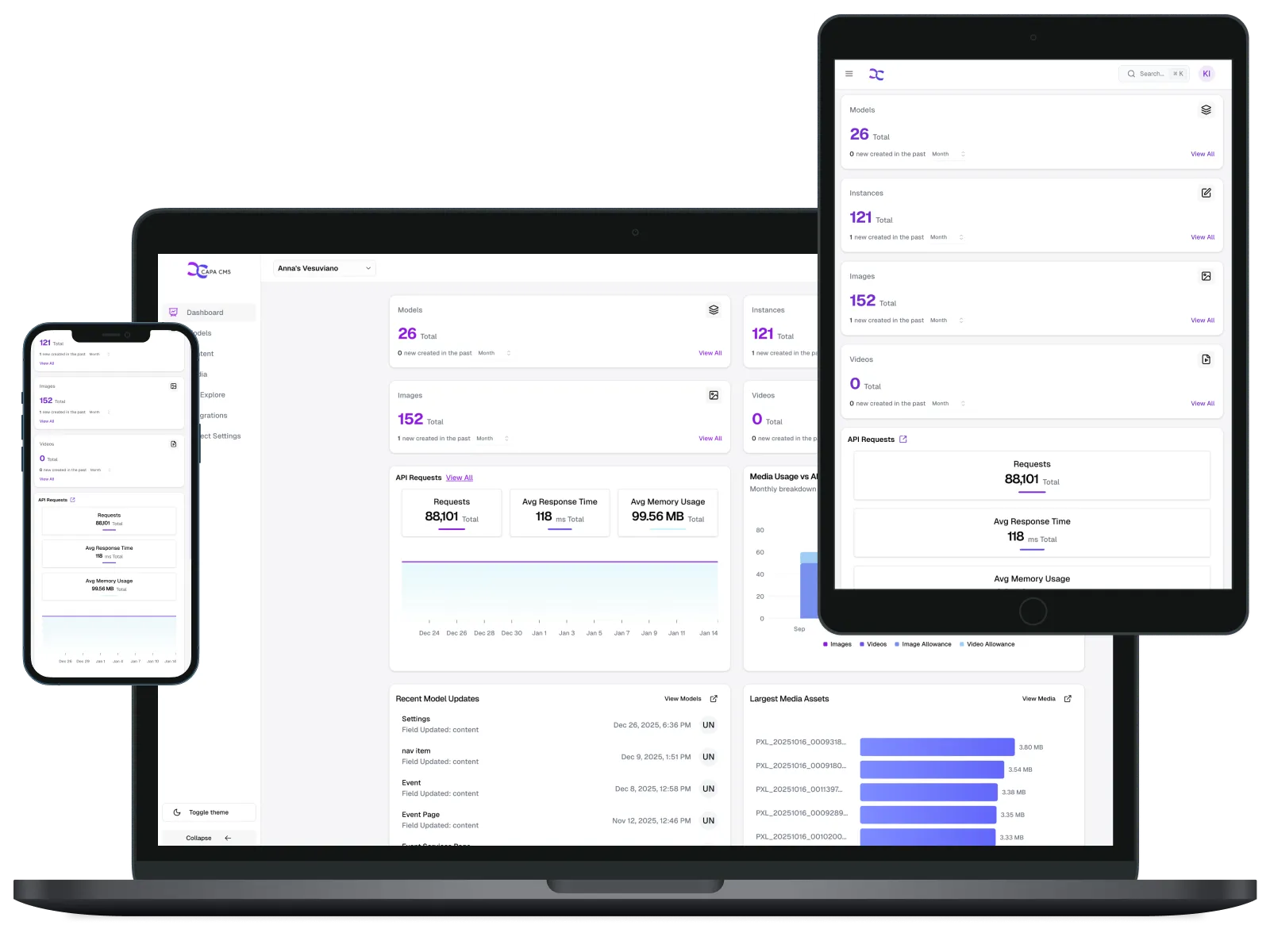
CAPA CMS was born out of a clear internal need at ZVN DEV. After working with a wide range of content management systems across client projects, we found ourselves consistently frustrated by bloated feature sets, expensive pricing models, and workflows that slowed both designers and developers down. We set out to design and build a CMS that prioritized speed, clarity, and flexibility, while remaining approachable for non-developers. Through close collaboration with our development team, we explored what a modern, headless CMS could be if it focused on being a true central source of truth, lightweight, integration-ready, and easy to operate from day one.
Most CMS platforms available to us were over-engineered for real-world use. Dashboards were cluttered with unnecessary metrics, media management was cumbersome, and mobile experiences were often an afterthought. From a development perspective, these systems were difficult to deploy, extend, or migrate, adding ongoing maintenance overhead. Many were also built on legacy architectures that struggled in modern, cloud-native environments, making workflows unnecessarily painful. We needed a CMS that reduced complexity, respected modern development practices, and empowered both technical and non-technical users without sacrificing control or performance.
The design process began with extensive research into existing CMS platforms, identifying both patterns worth preserving and pain points worth eliminating. I worked closely with developers to map workflows, define content models, and establish a dashboard structure that emphasized clarity over volume. Low-fidelity wireframes were used to explore layout, navigation, and responsive behavior, ensuring the system would remain intuitive across devices. As the design evolved, we leveraged the shadcn/ui design system to build a consistent, accessible interface while simplifying content creation, media management, and publishing workflows, all while maintaining the flexibility expected from a headless CMS. The interface was intentionally designed to feel approachable for non-developers, while still supporting advanced use cases through APIs and integrations.
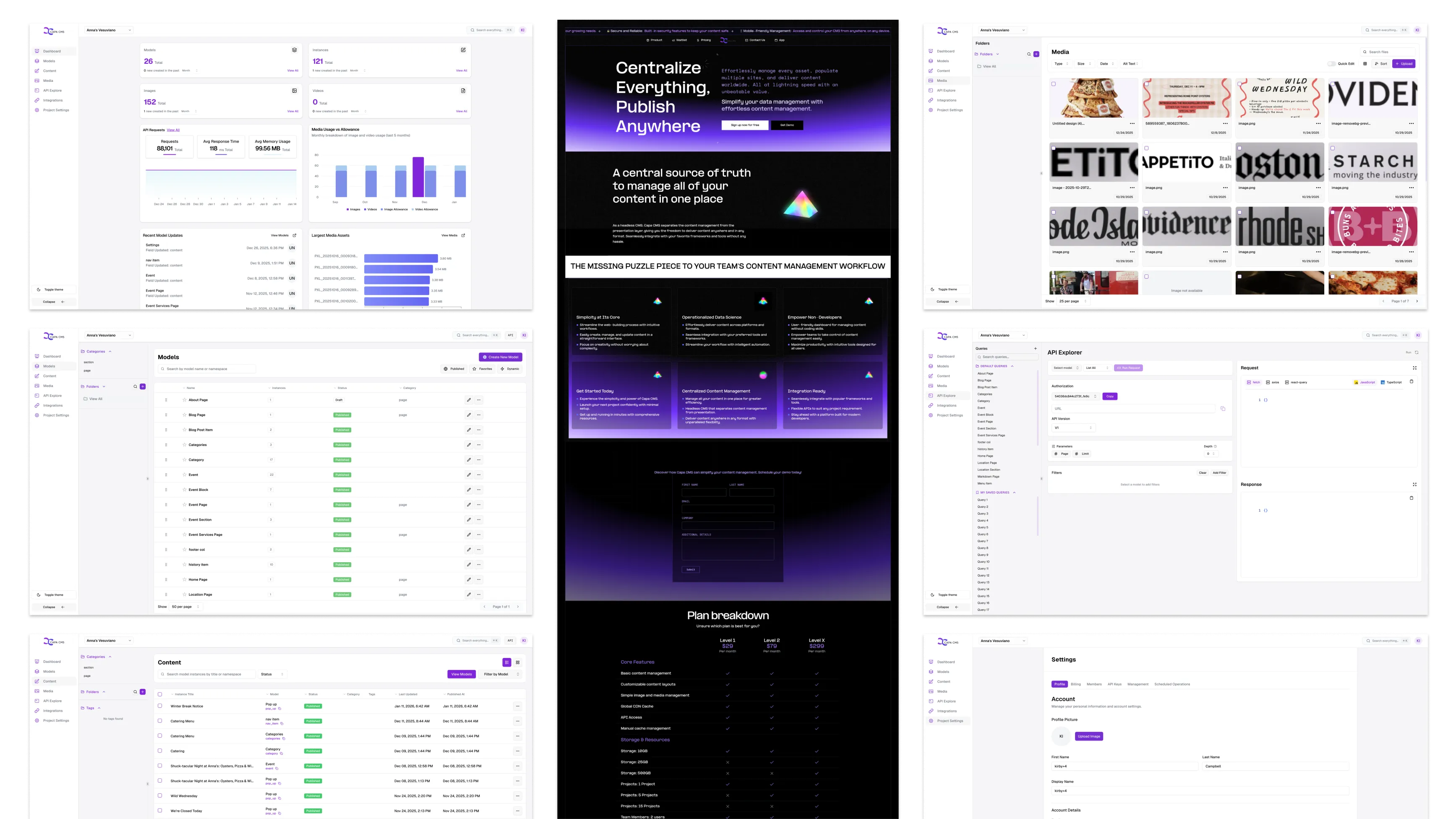
The result was CAPA CMS, a lightweight, headless content management system that centralizes content while allowing it to be delivered anywhere and in any format. After extensive testing across internal websites and applications, we began rolling it out to active client projects and immediately saw improvements in speed, usability, and developer experience. CAPA CMS provides a clean, intuitive dashboard, flexible content layouts, simple media management, and performance-focused features like global CDN caching and intelligent cache regeneration. Based on internal success, we expanded CAPA CMS for third-party use, offering a focused feature set, modern architecture, and affordable pricing. Today, it serves as a scalable, integration-ready platform that supports both internal workflows and external teams with confidence.